


.webp)
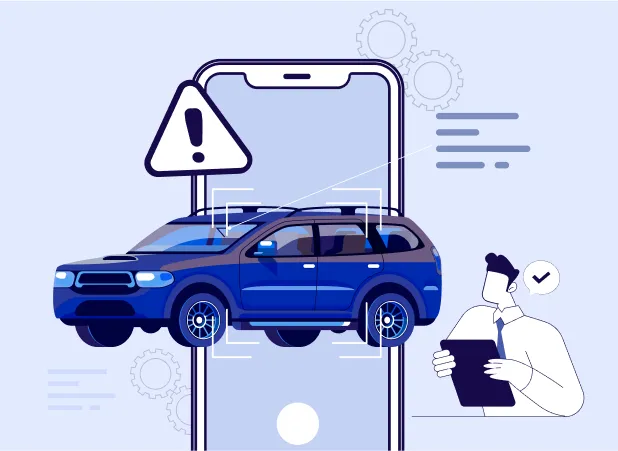
In the auto after-market industry, particularly among OEMs, dealerships, and multi-brand operators, achieving accuracy and efficiency in vehicle damage assessment is essential. The traditional assessment method, which mainly relied on manual inspections and was the standard for many years, has become largely outdated.
As today's vehicles come equipped with more sophisticated and advanced technologies and designs, making accurate and efficient damage assessment is more challenging than ever. Traditional methods often fall short in identifying hidden or complex damages, especially those related to, for example, advanced driver assistance systems (ADAS) and other electronic components.
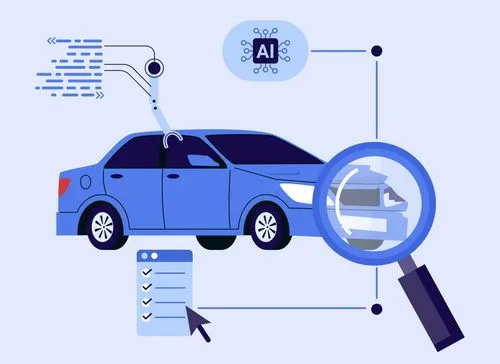
These complex challenges demand leading-edge technology to solve them. Enter AI (Artificial Intelligence). By embracing the significant advancements made possible by AI and computer vision technologies, automotive professionals can now accelerate and improve the accuracy and efficiency of their damage assessment operations—and position themselves at the front of the grid in the industry's race to the future.
Evolving Assessment with Technology:
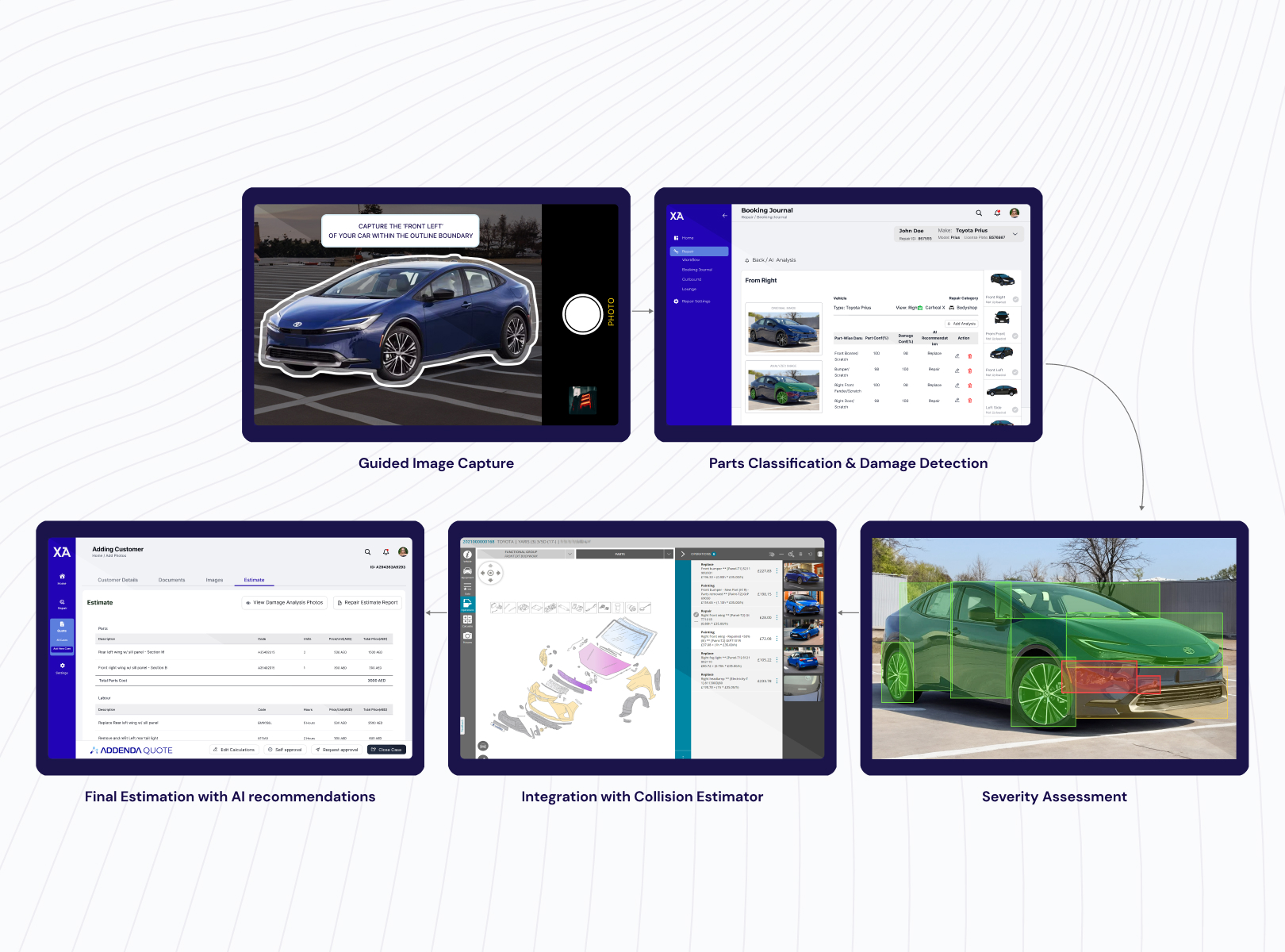
In the ever-evolving world of auto insurance and vehicle repair, the integration of Artificial Intelligence (AI) and Visual Intelligence (VI) technologies is revolutionizing the way insurers and repairers handle claims and repair estimates. There is an intricate six-step process that takes us from a simple set of images of the damage, to a comprehensive final estimate, highlighting how AI/VI and manual estimation tools are transforming the industry:
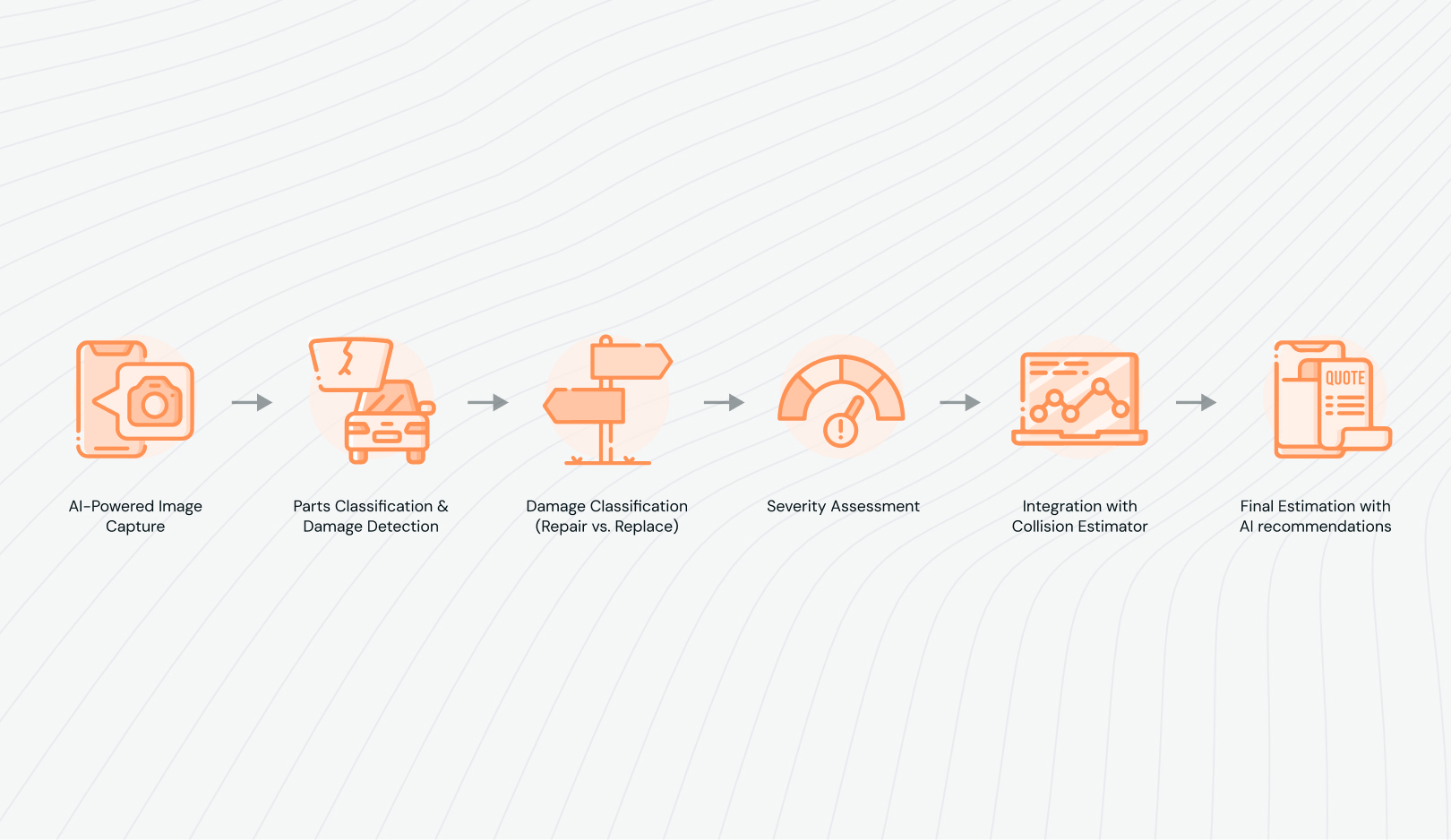
1. The Dawn of Digital Assessment: AI-Powered Image Capture
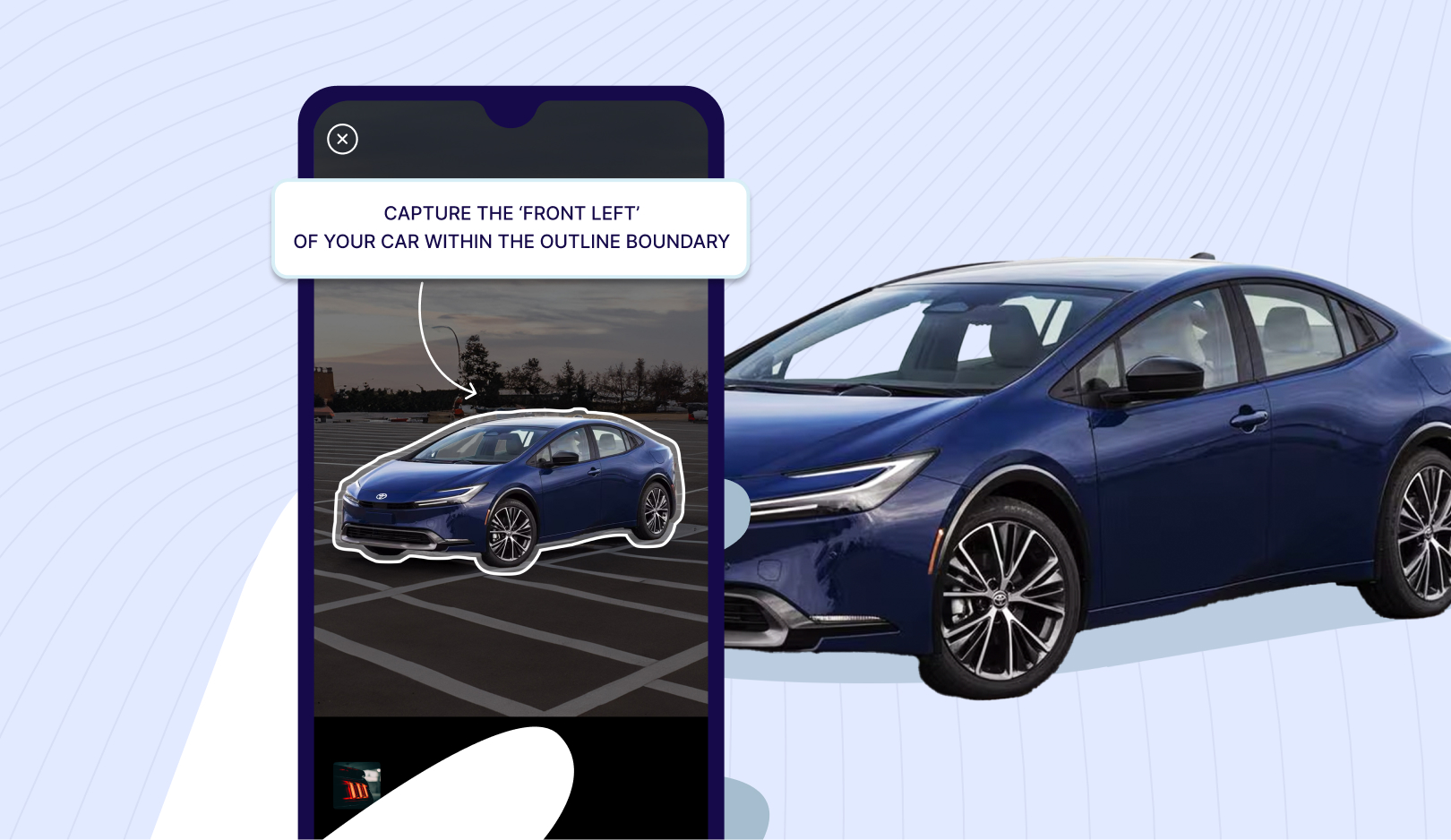
The process begins with capturing images of the vehicle's damage, a process revolutionized by AI and VI technologies. AI-Powered image capture is more than just taking pictures—it's an intelligent process where AI algorithms direct the user to capture comprehensive and detailed images from specific angles and positions. This ensures that all aspects of the damage are documented, which is crucial for accurate assessments.
This technology benefits insurers by providing a clearer and more complete picture of the damage, leading to better-informed decisions from the outset. For repairers, it means receiving a set of images that accurately represent the vehicle's condition, enabling them to prepare more effectively for the repairs.
AI-Powered image capture also addresses common challenges such as poor lighting, obscured damage, and missing angles. The technology can prompt the user to retake images or adjust positions, ensuring that the final set of images is as informative as possible. This step is fundamental as it lays the groundwork for the entire estimation process, ensuring accuracy and efficiency from the start.
2. Unveiling the Damage: Parts Classification & Damage Detection
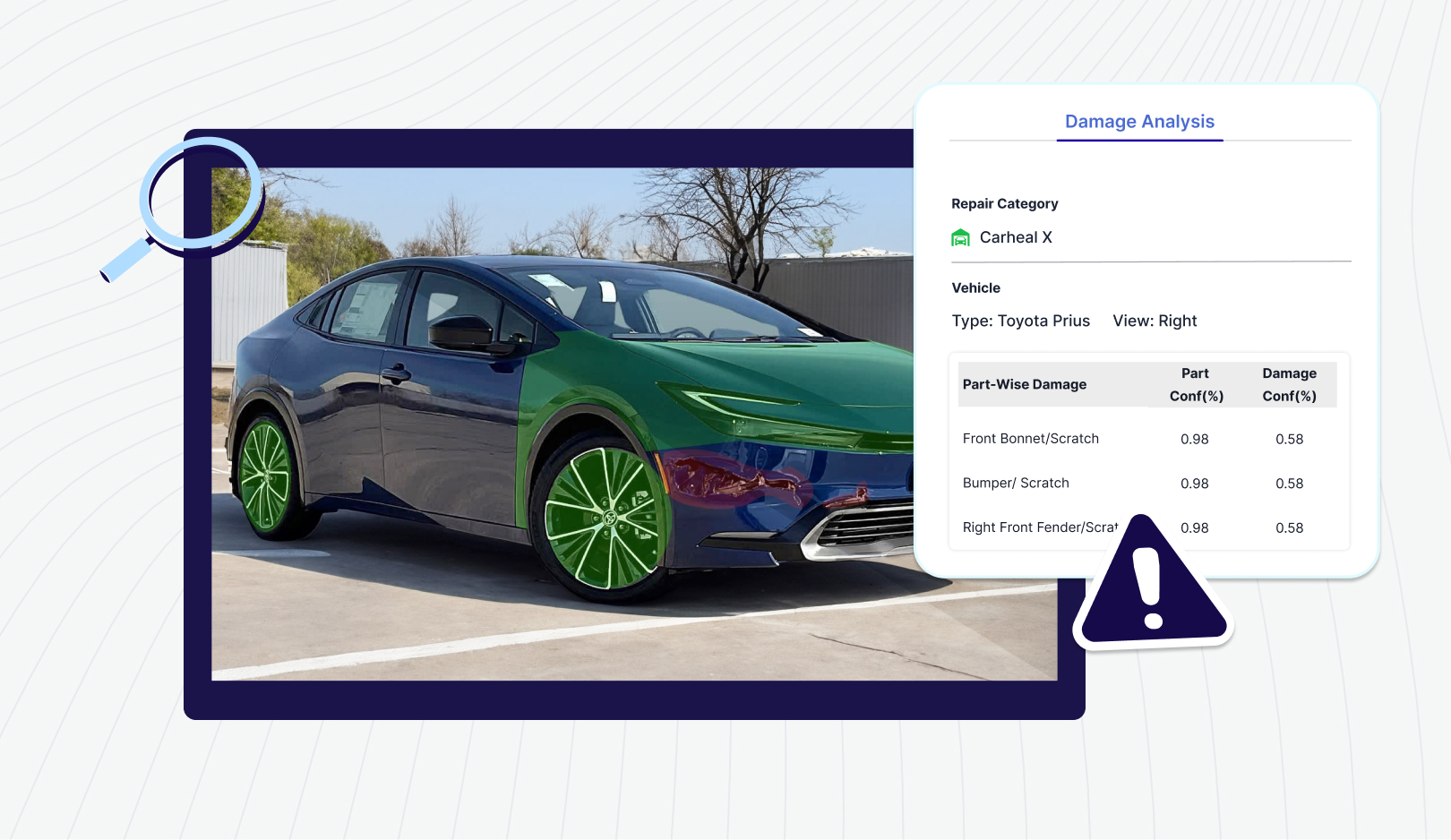
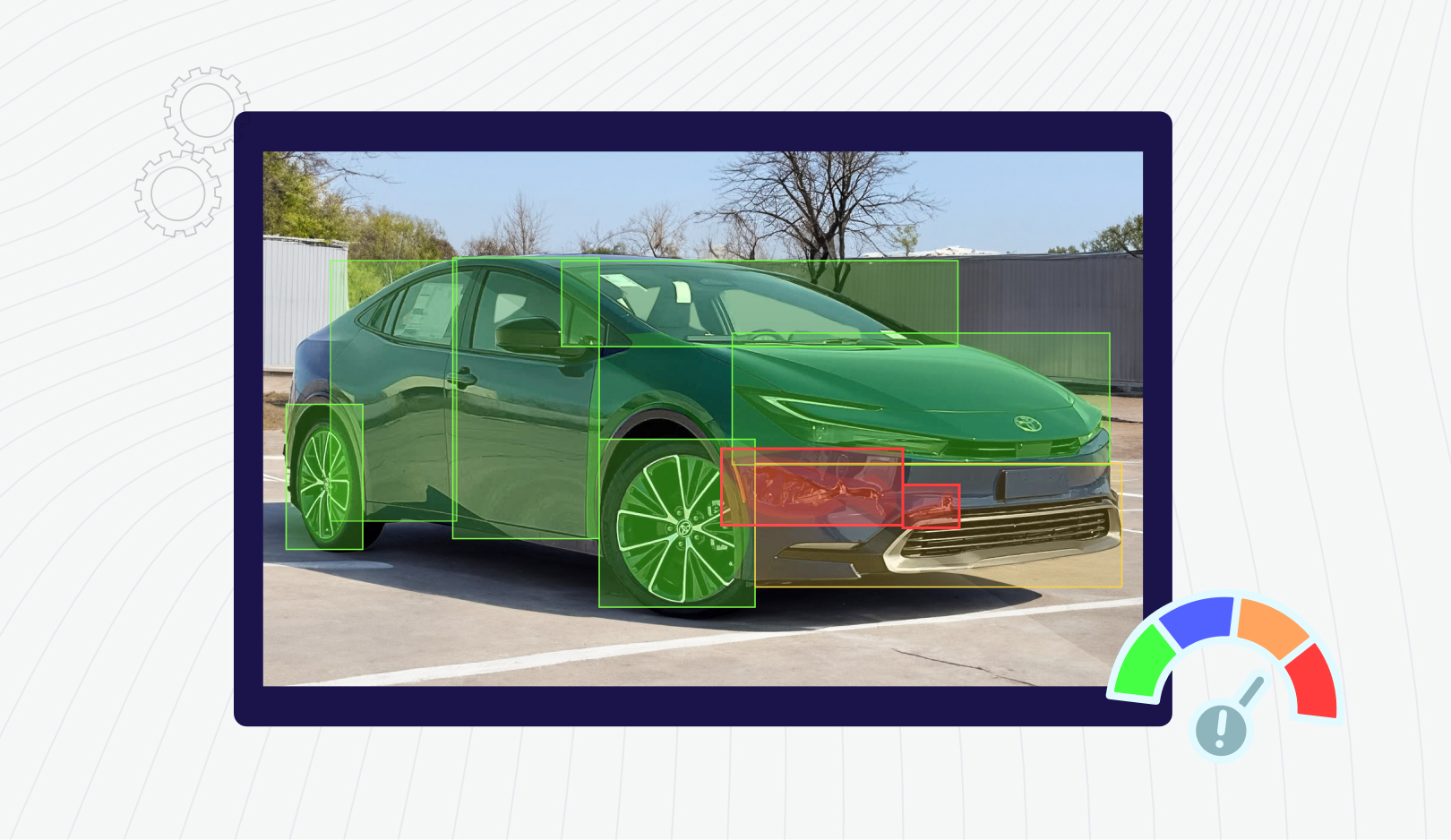
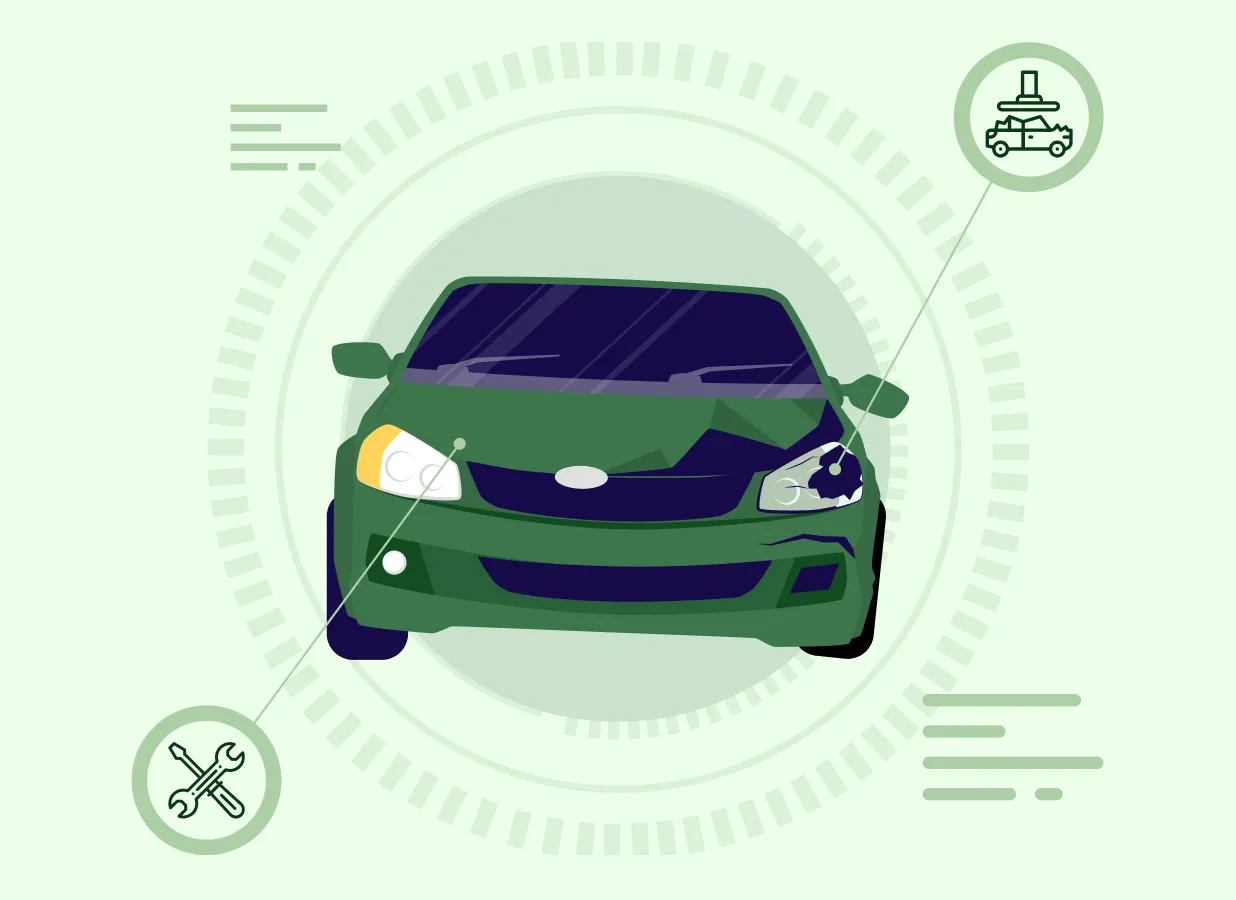
Once the images are captured, AI algorithms work to classify vehicle parts and detect damage. This stage is a significant leap from traditional methods, offering a level of precision and detail that manual inspections can struggle to achieve. The AI examines each image, identifying various vehicle parts and assessing the extent and nature of the damage.
For insurers, this AI-driven analysis means a more accurate and faster assessment of claims, reducing processing time and improving customer satisfaction. Repairers benefit from a clear understanding of the damage scope, which aids in more accurate job planning and resource allocation.
The sophistication of AI in parts classification and damage detection lies in its ability to learn and adapt. As it processes more data and images, the AI becomes increasingly proficient in recognizing a wide range of damages and vehicle models. This adaptability is crucial in an industry where vehicle designs and technologies are constantly evolving.
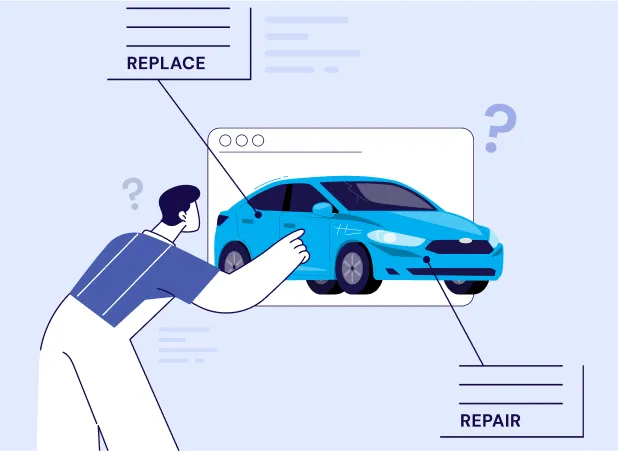
3. Decision Time: Damage Classification (Repair vs. Replace)
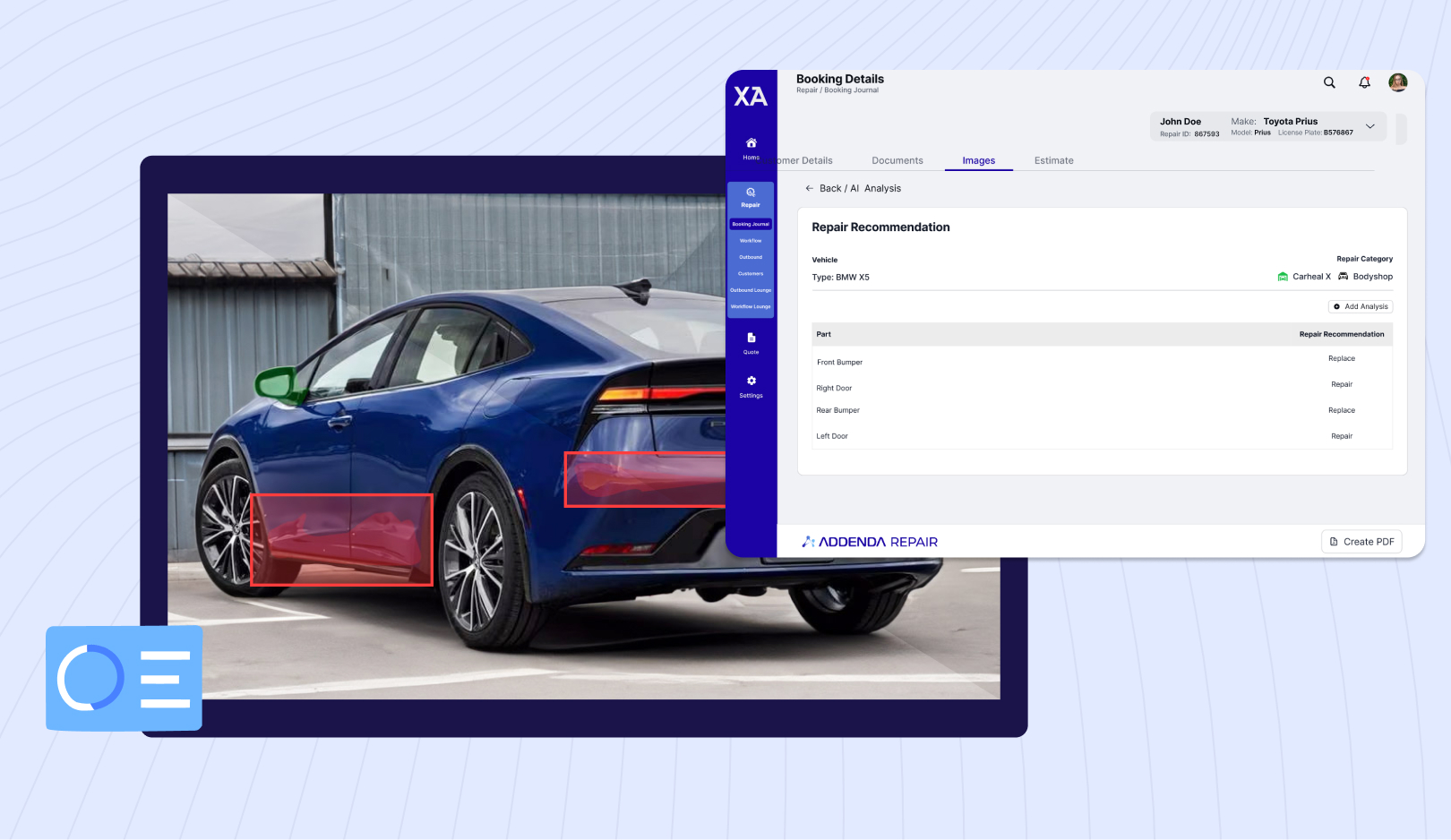
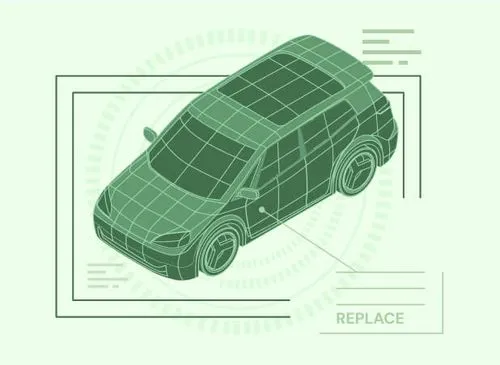
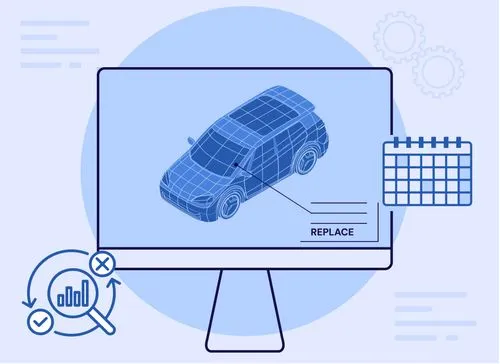
The AI then undertakes the critical task of classifying damages for repair or replacement. This involves not only identifying the damage, but also determining the most cost-effective and safest repair approach. For insurers, this means better-controlled claim costs, while for repairers it results in clear, directive guidance, reducing ambiguities in repair decision-making.
This step is where AI's data processing capabilities truly shine. By analyzing a vast array of factors, including part types, damage severity, and repair costs, the AI can make informed recommendations on whether to repair or replace a part. This is especially crucial in modern vehicles, where the right decision can significantly impact safety and cost.
The AI's recommendations are grounded in a deep understanding of automotive repair standards and cost-efficiency. This helps ensure that repairs are not only economically viable, but also adhere to safety standards. It's a step that revolutionizes the traditionally time-consuming and often subjective decision-making process in damage assessment.
4. Understanding the Impact: Severity Assessment
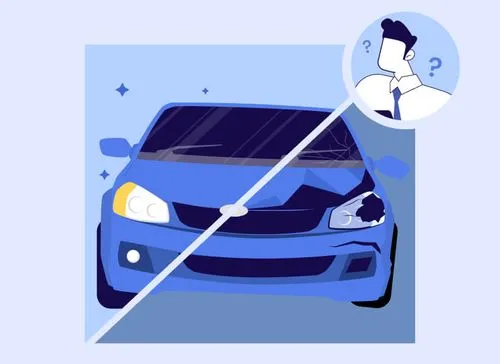
Assessing the severity of damage is a crucial component of the estimation process. The AI examines the extent of damage in detail, which influences the repair method and cost estimation. This step aids insurers in setting appropriate reserves for claims and assists repairers in planning the repair work accurately.
The severity assessment involves analyzing the depth, size, and location of the damage. AI technologies, such as 3D scanning and depth gauging, provide a detailed view of the damage, surpassing the capabilities of a manual inspection. This allows for a more precise understanding of the repair work needed, ensuring that estimates are accurate and comprehensive.
The AI's ability to assess severity accurately and quickly is a game-changer. It means that repairers can anticipate challenges and requirements for the repair process, leading to more efficient workflow planning. Insurers benefit from a clearer picture of the claim's value, enabling more accurate and fair compensation.
5. The Preliminary Blueprint: Integration with Collision Estimator
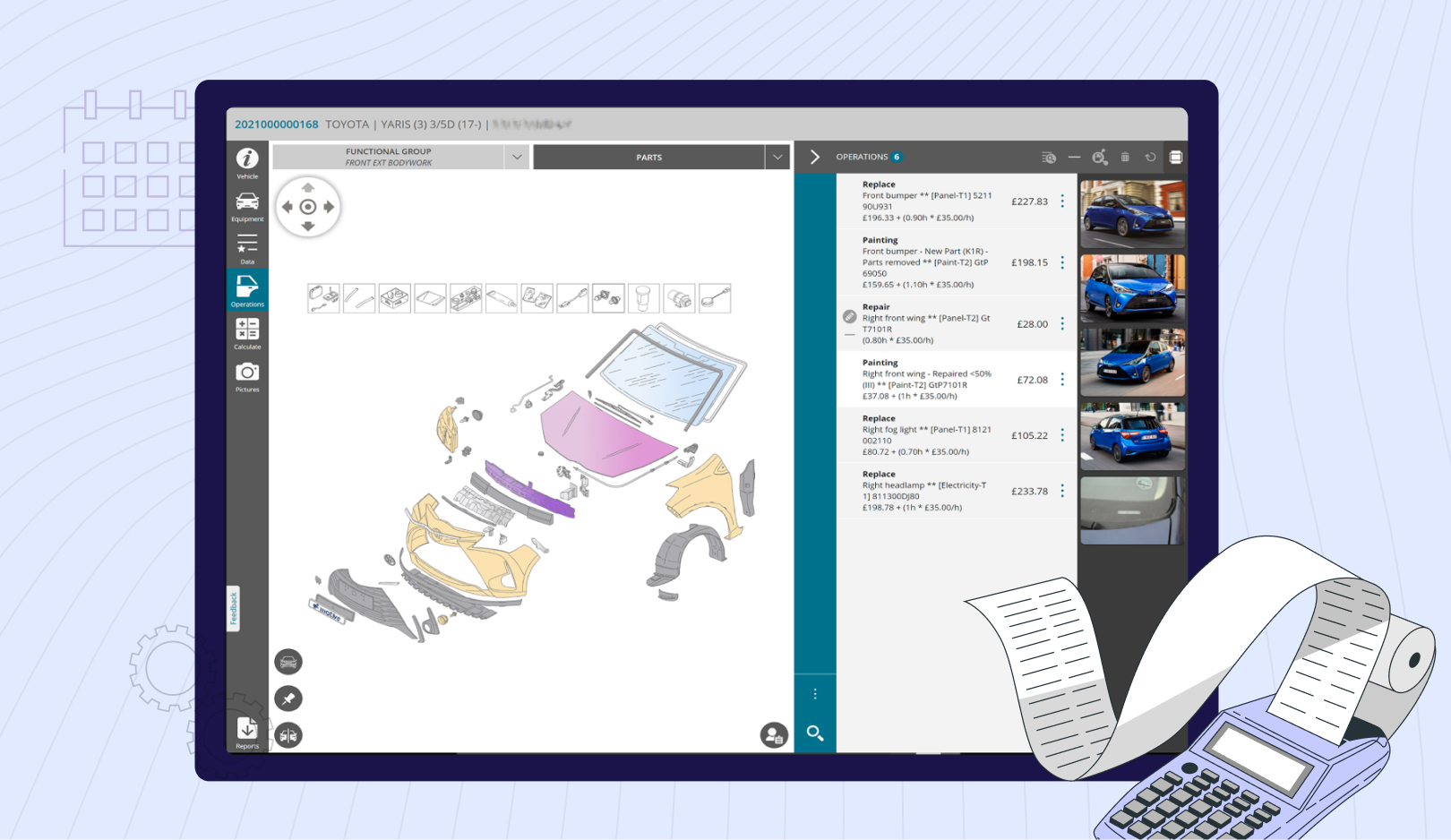
AI technologies then integrate their findings with collision estimation tools, creating a preliminary cost estimate. This integration marks a significant advancement, offering rapid and accurate estimates that cover parts, labor, and paint costs. For insurers, this results in faster claim processing, and for repairers it provides a detailed blueprint for repair work.
The collision estimator tools, enhanced by AI, can itemize the required repairs and associated costs, painting a clear picture of the overall repair process. This level of detail is crucial for effective planning and resource allocation. It also ensures transparency, as both insurers and repairers have a clear understanding of the repair costs involved.
This step exemplifies the power of technology in transforming traditional processes. By combining AI analysis with sophisticated estimatics tools, the preliminary estimate becomes a comprehensive, data-driven plan. This not only accelerates the estimation process, but also enhances its accuracy, setting a new standard in vehicle damage assessment.
6. The Final Verdict: Final Estimate with AI Recommendations
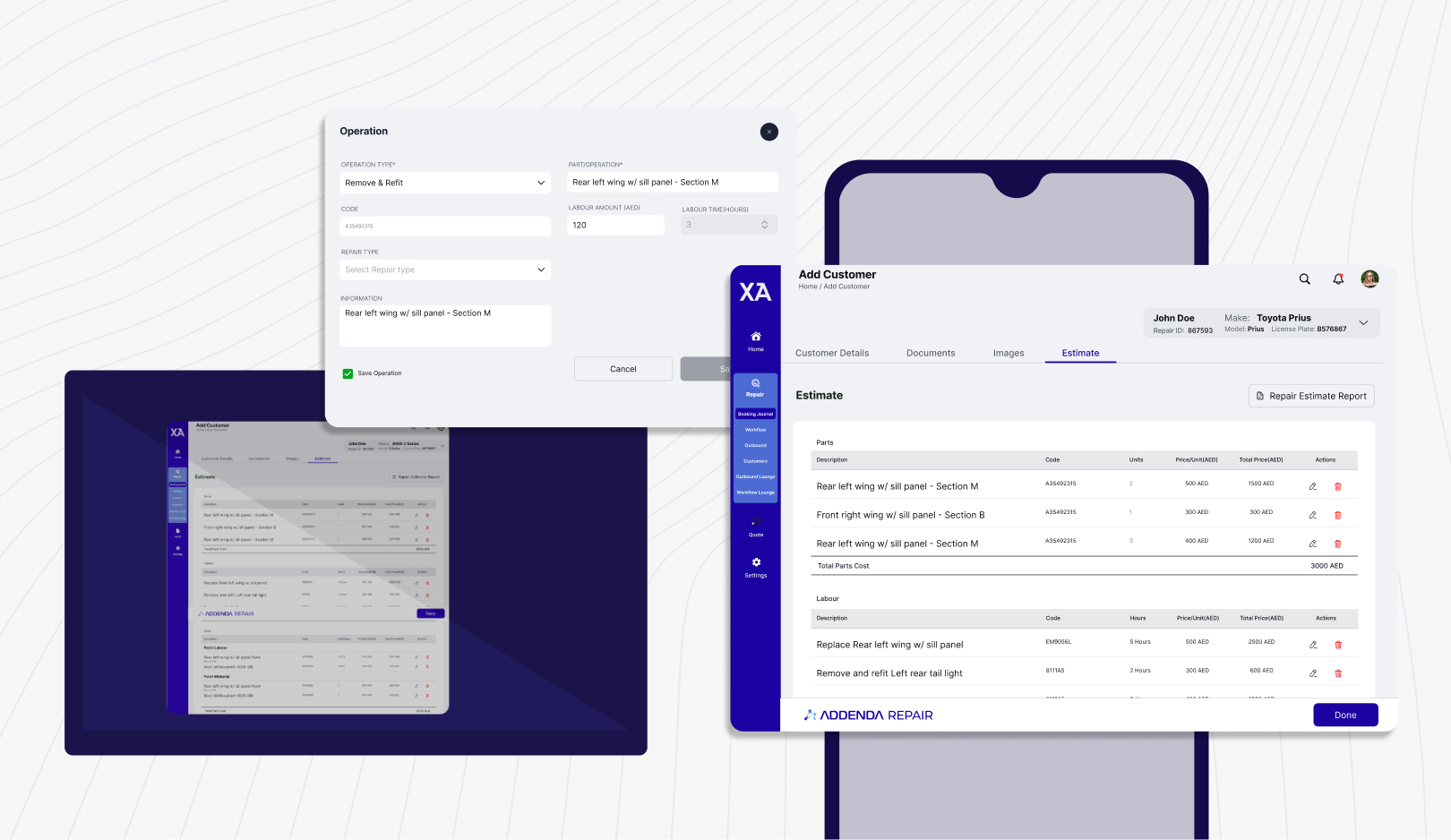
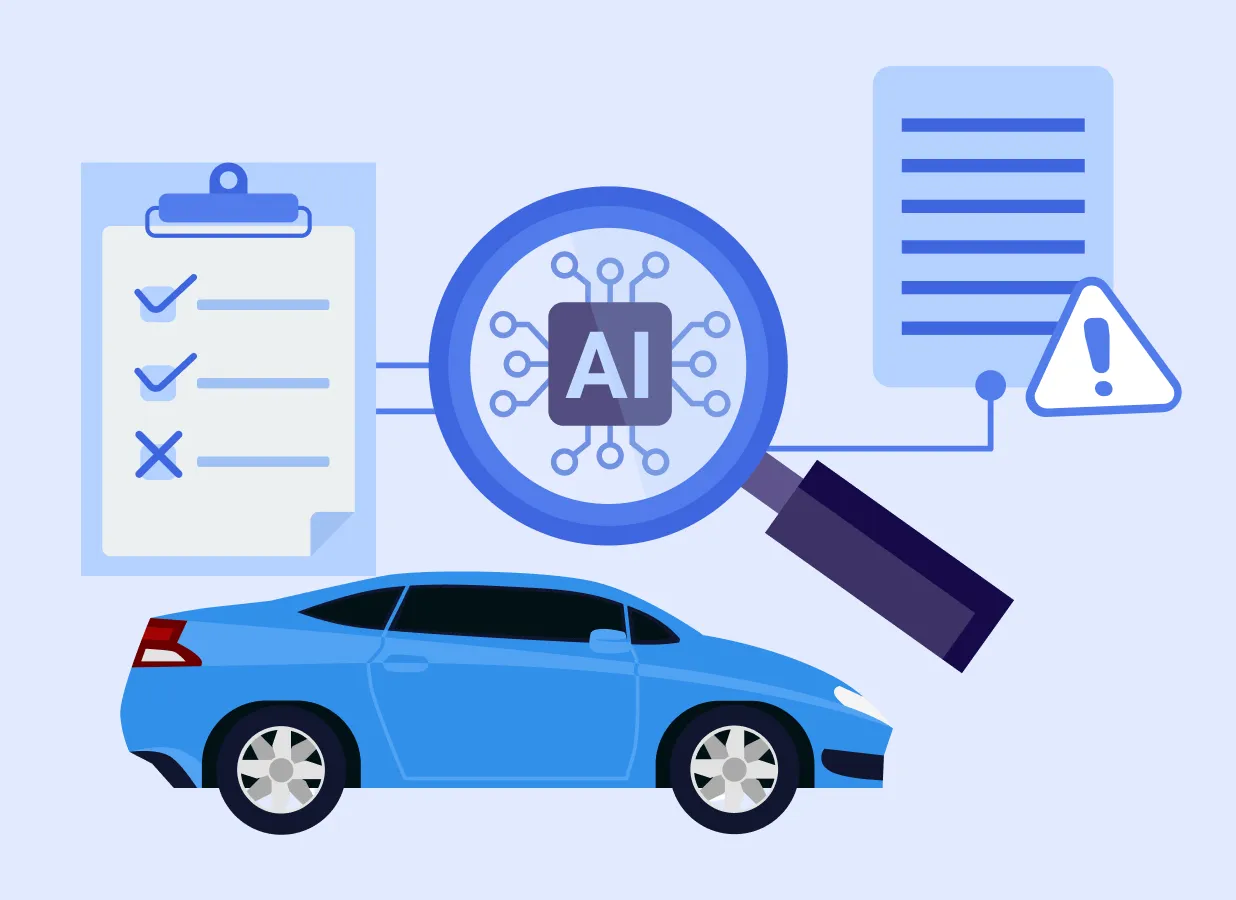
In the final step, the AI refines the preliminary estimate into a comprehensive final one, often including recommendations for repair or replacement based on various factors like cost, safety, and efficiency. This final estimate is crucial for insurers to finalize claim amounts, and for repairers to generate detailed repair orders.
The AI's recommendations are based on a holistic analysis of the vehicle's condition, repair history, and current damage. It considers factors such as the cost-effectiveness of repairs versus replacement, the impact on vehicle safety and functionality, and the overall efficiency of the repair process.
This final estimate represents the culmination of a sophisticated, data-driven process. It provides insurers and repairers with a detailed and reliable plan for vehicle restoration. The inclusion of AI recommendations adds an extra layer of insight, ensuring that the final decision is not only based on cost, but also on the best outcome for the vehicle's condition and safety.
The collaboration between insurers and repairers using this advanced process signifies a new era in vehicle insurance and repairs. This AI-driven approach streamlines the entire claim and repair process, ensuring accuracy, cost-efficiency, and customer satisfaction.
Addenda — Welcome to a New Era in Vehicle Insurance and Repairs
A new and unique ecosystem—Addenda —has emerged, combining the strengths of AI-driven damage detection, advanced estimatics, and manual oversight to ensure accuracy and efficiency:
Addenda Vision for Damage Detection: Addenda Vision utilizes AI and computer vision to automate and refine the initial damage detection process. Its sophisticated algorithms rapidly identify damage, ensuring no detail is overlooked.
GT Motive Powers Estimatics: GT Motive enhances the precision of damage assessments with advanced estimatics capabilities. It provides comprehensive data and insights, crucial for creating accurate and detailed repair estimates.
Addenda Quote Balances with Manual Expertise: Addenda Quote leverages the capabilities of Addenda Vision and GT Motive, while enabling the seasoned technicians to make their final adjustments based on their previous experience.
Embracing these AI and computer vision technologies for exterior damage assessment not only addresses the limitations of traditional methods, but also aligns repair shops with the future trajectory of the automotive industry. This will be essential for maintaining competitiveness and enabling firms in this industry to meet the evolving and increasing demands of customers.
Real-World Benefits
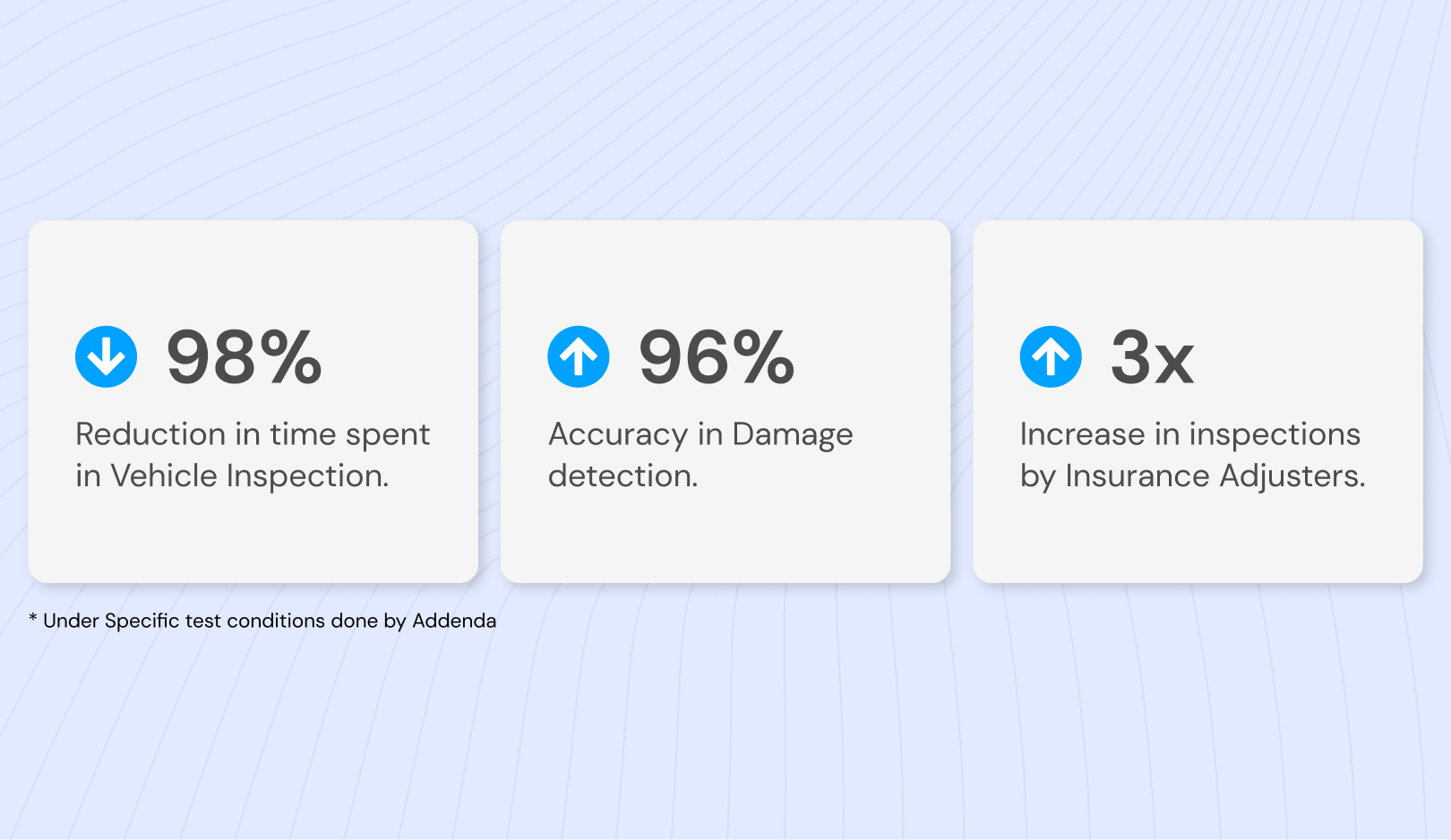
While we may think of AI as shaping the future of the automotive industry, it is undoubtedly here and transforming repair shop operations today. So, what do the benefits look like? Below are some real-world stats that showcase how Addenda AI is not only streamlining damage assessment processes, but also providing time, cost and efficiency benefits.
Are you Ready to Join the AI Journey?
There’s no doubt that making the journey from today’s manual, error-prone assessment methods to an AI-driven future is essential for the success of the industry. In a world where one millimeter can make a thousand-dollar difference, by adopting AI solutions, repair shops and insurance carriers can not only upgrade their processes, but also invest in a future where accurate, efficient, and reliable damage assessments become the absolute norm.
Adopting AI is about keeping ahead in the race. In fact, utilizing AI isn't just seen as an advantage, it's a necessity. The road ahead doesn’t have to be bumpy. With AI and computer vision technologies like ADDENDA, it can be a smooth and fast ride into a new era of enhanced efficiency and precision.
Buckle up. It's time to accelerate into an AI-driven damage assessment future.
.png)










.svg)

.webp)


.webp)
.webp)