Smart Claims
Zoom meeting screen showing diverse participants in individual video windows engaged in a virtual call.
July 30, 2026

What Customers Expect After an Accident

Mohamed Bashir
4
min read

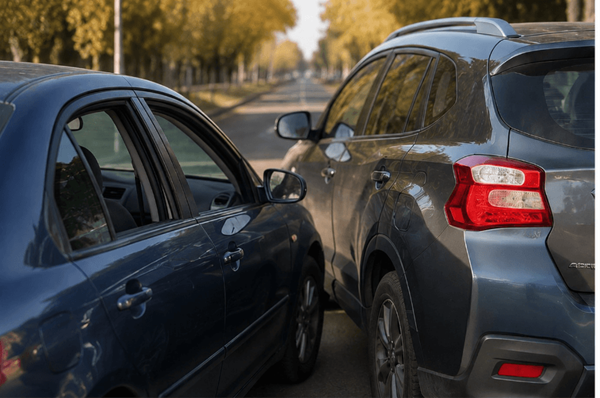
An accident can turn an ordinary day into a list of urgent questions. Is everyone safe? Can the vehicle be driven? Who needs to be contacted? What documents are required? How long will the repair take?

At that moment, customers are not thinking about the complexity of claims operations. They are looking for clarity, reassurance and a sense that the situation is under control. The quality of the claims experience is shaped not only by the final settlement, but also by everything that happens between the first call and the return of the vehicle.

Research continues to show that digital convenience matters, but it does not replace the need for a connected experience. JD Power found that customers are particularly frustrated when they are forced to switch channels to resolve one inquiry, while poor digital claims experiences are strongly associated with a greater risk of customers leaving their insurer.

Clear instructions from the beginning

Customers should not have to understand insurance terminology before they can report an accident. They need straightforward guidance on what to do first, what information to provide and what will happen next.

A strong first-notification process explains the immediate steps in plain language. It should make clear whether a police report is required, how to submit photographs, where the vehicle may be taken and when the customer can expect the next update. Good guidance prevents avoidable delays and reduces the number of follow-up calls.

A simple way to report the claim

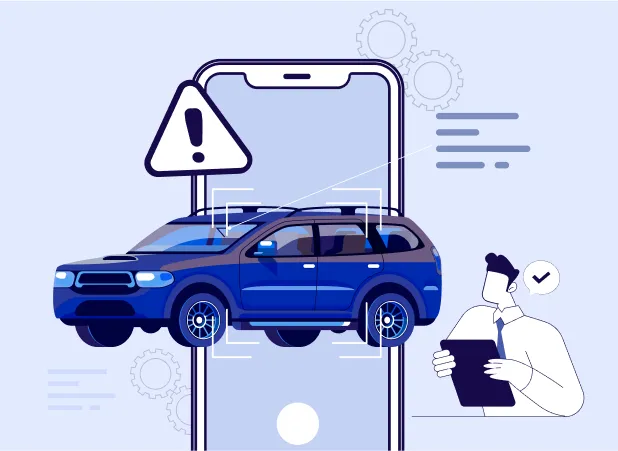
Customers increasingly expect to start a claim through a mobile app, website or guided digital link. That process should be short enough to complete under stressful circumstances while still collecting the information the insurer needs.

The best digital journeys guide the customer rather than presenting a long form. They explain which photographs to take, confirm whether each file has uploaded successfully and save progress if the customer needs to stop. Information already held by the insurer, such as policy and vehicle details, should be prefilled whenever possible.

One connected conversation

A customer may be comfortable starting digitally and later choosing to speak with a claims professional. The problem begins when changing channels also means starting again.

In JD Power’s 2026 auto insurance research, 46% of customers said they had used multiple interaction channels during the previous year. The experience became meaningfully worse when they were required to switch channels to resolve one inquiry.

Whether the customer uses an app, telephone, email or WhatsApp, the insurer should retain the same claim history. The customer should not need to repeat the accident description or resubmit documents simply because another team has taken over.

Proactive and meaningful updates

Silence creates uncertainty. A claim may be progressing internally, but if the customer cannot see that progress, it can feel as though nothing is happening.

Useful updates answer practical questions: Has the claim been registered? Is more information required? Has the assessment been completed? Has the repair been approved? Are parts available? When is the vehicle expected to be ready?

More messages are not necessarily better. Customers need timely updates connected to real milestones, with a clear explanation of any delay and what will happen next.

Visibility beyond the insurer

The claims experience does not stop when a vehicle reaches the repairer. For many customers, this is when the waiting begins.

Insurers should provide visibility into assessment, repair authorization, parts availability and repair progress. This requires better coordination with surveyors and repairers, not simply a more polished customer portal. A status tracker is only useful when the information behind it is current.

Access to a person when it matters

Digital self-service is valuable for routine steps, but customers still need a clear route to human support. This is especially important when liability is unclear, the vehicle may be a total loss, the repair is delayed or the customer disagrees with a decision.

The role of the claims professional is not only to process information. It is also to explain, reassure and take responsibility for moving a difficult case forward.

A fair and understandable outcome

Customers want to know how decisions were reached. If an estimate is revised, a claim is partially declined or a vehicle is declared a total loss, the reasoning should be explained in language the customer can understand.

The final outcome may not always be the one the customer hoped for, but a transparent process can preserve trust. Fairness is experienced through clear evidence, consistent decisions and a genuine opportunity to ask questions or challenge an error.

The claims experience is the insurance promise in action

Customers do not expect every claim to be completed instantly. They do expect the insurer to make the journey understandable.

After an accident, the essentials are remarkably consistent: simple reporting, clear ownership, proactive communication, repair visibility, human support and a fair outcome. Insurers that deliver these well do more than resolve a claim. They reinforce the reason the customer bought insurance in the first place.  

Explore how Addenda connects insurers, customers, surveyors and repairers across the motor claims journey.

This is some text inside of a div block.
Zoom meeting screen showing diverse participants in individual video windows engaged in a virtual call.
This is some text inside of a div block.

Heading

This is some text inside of a div block.
Button Text
July 30, 2026
Zoom meeting screen showing diverse participants in individual video windows engaged in a virtual call.
min

What Customers Expect After an Accident

An accident can turn an ordinary day into a list of urgent questions. Is everyone safe? Can the vehicle be driven? Who needs to be contacted? What documents are required? How long will the repair take?
Smart Claims
Related Blogs
Estimation Accuracy
Mar 16, 2026
Zoom meeting screen showing diverse participants in individual video windows engaged in a virtual call.
5
min read

How AI is driving a six-step process to transform vehicle damage assessment

In the auto after-market industry, particularly among OEMs, dealerships, and multi-brand operators, achieving accuracy and efficiency in vehicle damage assessment is essential.
Estimation Accuracy
Mar 16, 2026
Zoom meeting screen showing diverse participants in individual video windows engaged in a virtual call.
5
min read

Vision AI and collision estimatics: Taking estimate accuracy to a new level

In the evolving landscape of vehicle damage repair and maintenance, the convergence of Vision AI and collision estimatics marks a revolutionary leap forward.
Repair vs Total Loss
Mar 16, 2026
Zoom meeting screen showing diverse participants in individual video windows engaged in a virtual call.
10
min read

Smarter decisions in auto insurance: Why AI is a game changer

One of the biggest decisions facing auto insurance companies is whether to fix a damaged car, or call it a total loss
Repairer Allocation
Mar 16, 2026
Zoom meeting screen showing diverse participants in individual video windows engaged in a virtual call.
5
min read

Repairer allocation: A five-step guide to enhancing efficiency and customer satisfaction

The whole process of repairer allocation following an auto accident is fraught with complexities. It involves and impacts different stakeholders in an often complex process
Repair vs Total Loss
Mar 16, 2026
Zoom meeting screen showing diverse participants in individual video windows engaged in a virtual call.
5
min read

Auto repair vs. total loss – Making the right decisions

In auto insurance, the critical decision between repairing a vehicle or declaring it a total loss can impact both an insurer’s financial stability as well as the overall satisfaction and loyalty of its customers.
Estimation Accuracy
Mar 16, 2026
Zoom meeting screen showing diverse participants in individual video windows engaged in a virtual call.
5
min read

The imperative of estimation accuracy in vehicle repairs: Unveiling the hidden challenges

In the realm of automotive repairs and insurance claims, the precision of damage estimation is not merely a procedural step; it's the bedrock of trust, efficiency, and financial sustainability. Misestimations can lead to a cascade of negative outcomes, including inflated costs, customer dissatisfaction, and operational inefficiencies. Here, we delve into the crux of estimation accuracy, exploring its challenges and proposing industry-leading practices to elevate accuracy and reliability.
Repair vs Total Loss
Mar 16, 2026
Zoom meeting screen showing diverse participants in individual video windows engaged in a virtual call.
5
min read

Best practice series #2: Auto repair vs. total loss—how to make the right decisions

One critical decision that affects insurers, repair shops, and policyholders is whether to repair a damaged vehicle or declare it a total loss. For insurers, it’s not just about crunching the numbers; it's about maintaining a delicate balance between accuracy, fairness, operational efficiency, and customer satisfaction.
Fraud Analytics
Mar 16, 2026
Zoom meeting screen showing diverse participants in individual video windows engaged in a virtual call.
5
min read

Auto Insurance Fraud: How AI Helps Win

Fraud. It’s a word that insurers know extremely well when dealing with auto insurance claims. Fraudulent auto insurance claims represent a significant financial burden to insurers. The costs associated with these claims can be multifaceted, impacting not only the insurance companies but also their partners, customers, and the broader insurance market.
Digitization
Mar 16, 2026
Zoom meeting screen showing diverse participants in individual video windows engaged in a virtual call.
2
min read

Digitizing auto service and repair with AI and automation

Digitization is no longer a ‘nice to have’ for automotive repair shops; it’s essential. Whereas in the past, repair shops focused on the mechanics, later on the electrics, and then on the electronics of vehicles, today digitization is front of mind for repair shop owners.
Auto Repair Software
Mar 16, 2026
Zoom meeting screen showing diverse participants in individual video windows engaged in a virtual call.
10
min read

How Lack Of Auto Repair Software Is Holding Back Traditional Workshops

Explore how outdated systems are causing traditional workshops to fall behind. Discover the impact of AI-powered Auto Repair Software solutions like Addenda.
Auto Repair Software
Mar 16, 2026
Zoom meeting screen showing diverse participants in individual video windows engaged in a virtual call.
12
min read

The Role of Auto Maintenance Software in Transforming the UAE Auto Repair Industry in 2025

Explore how AI-powered Auto Maintenance Software is driving digital transformation in the UAE’s auto repair sector. See how Addenda is leading the change.
Digitization
Mar 16, 2026
Zoom meeting screen showing diverse participants in individual video windows engaged in a virtual call.
7
min read

Addenda by Xpress Automation at Ingate Saudi: Insights into AI-Driven Insurance Transformation

The insurance industry is undergoing a significant shift as organizations respond to increasing operational complexity, regulatory expectations, and rising customer demands. Traditional, manual-heavy processes are proving difficult to sustain in an environment where speed, accuracy, and transparency are becoming essential.
Illustration of a person wearing a hat and glasses facing a retro computer displaying code symbols and a profile image on the screen.
Ready to Digitize Your Business?

Book a personalized demo to explore how can Addenda help you digitize your operations.

Valid number
Terms & Conditions
Thank you for submitting a request for demo, our team will reach out to you for scheduling demo at your convenient time
Oops! Something went wrong while submitting the form.
Blue three-pointed star with a gradient from light to darker blue.