


.webp)

In other cases, the entire event is deliberately created.
This range is what makes motor insurance fraud difficult to manage. It can involve policyholders, drivers, passengers, intermediaries, repairers, towing providers, parts suppliers, or organized groups. It can happen before a policy is issued, while an accident is being reported, or after the vehicle reaches a workshop.
Across the GCC, insurers also operate within different national rules and claims processes. The UAE Central Bank requires insurers to maintain policies, procedures, and controls to reduce internal and external fraud risk. Saudi Arabia’s insurance anti-fraud framework similarly distinguishes between internal fraud, intermediary fraud, and policyholder fraud. The exact requirements vary by country, but the operational challenge is shared: identify deliberate deception without turning every genuine claim into an investigation.
The following are among the most widely recognized forms of motor insurance fraud relevant to GCC markets.
1. Insurance Application Fraud
Motor insurance fraud can begin before the insurer issues the policy.
Application fraud occurs when someone deliberately provides false, incomplete, or misleading information to obtain coverage, reduce the premium, avoid policy conditions, or secure terms for which the risk would not otherwise qualify.
- Providing an incorrect residential or vehicle registration address
- Hiding previous accidents, claims, policy cancellations, or driving violations
- Naming a lower-risk person as the main driver when someone else uses the vehicle most often
- Declaring personal use when the vehicle is regularly used for delivery, ride-hailing, or other commercial activity
- Providing false information about the vehicle’s value, specifications, ownership, or condition
- Failing to disclose material modifications
- Using another person’s identity or documents
The details may appear minor when the application is completed, but they influence how the insurer assesses, prices, and accepts the risk. If a claim later occurs, the false information can also complicate coverage decisions and create disputes that could have been avoided at the beginning.
2. Staged or Deliberately Caused Accidents
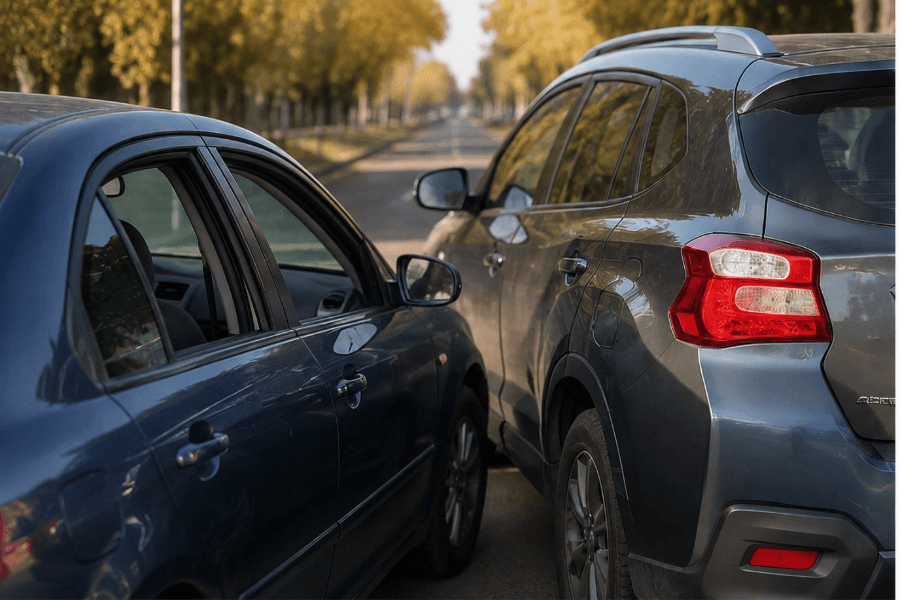
A staged accident is planned or intentionally caused to generate one or more insurance claims.
Some schemes involve only the people participating in the fraud. Others place an innocent motorist in a collision that was engineered. A driver may brake unexpectedly, move into another vehicle’s path, or coordinate with other vehicles to make the event appear accidental.
Claims may then be submitted for vehicle damage, bodily injury, treatment, towing, replacement vehicles, loss of income, or other expenses.
The challenge is that a staged collision may initially resemble an ordinary road accident. Insurers therefore need to examine the complete event: the official accident record, driver statements, vehicle positions, damage compatibility, passenger details, prior relationships among the parties, and any repeated patterns across earlier claims.
3. Fabricated Accidents and False Claim Narratives
In a fabricated claim, the accident did not happen as reported, or important parts of the story were invented.
- Reporting an accident that did not occur
- Claiming that another vehicle or driver was involved when they were not
- Adding passengers who were not present
- Creating repair invoices for damage or work that did not exist
- Reporting a covered accident to conceal damage caused in excluded circumstances
In many GCC claims journeys, an official accident report from the relevant police authority or an approved accident-management service is a central document. In Saudi Arabia, for example, Najm provides an official digital channel for reporting eligible traffic accidents. However, no single document should be reviewed in isolation. Fraud may involve inconsistencies between the report, the images, the vehicle damage, the timeline, and what the parties later say happened.
4. Exaggerated Claims
Not every fraudulent claim begins with a false accident. A genuine collision may occur, but the claimant deliberately increases the value of the loss.
- Adding unrelated damage to the repair estimate
- Exaggerating the severity or duration of an injury
- Claiming for personal property that was not damaged
- Extending the replacement-vehicle period beyond what was reasonably required
- Inflating towing, recovery, storage, or repair expenses
- Claiming lost income or business interruption that was not actually incurred
These cases can be difficult because the claim may contain both valid and invalid elements. The insurer must separate the genuine loss from the inflated portion rather than assuming that every inconsistency proves the entire claim is fraudulent.
5. Claiming Pre-Existing Damage as New
A customer reports a new accident but includes damage that was already present before the incident or before the policy began.
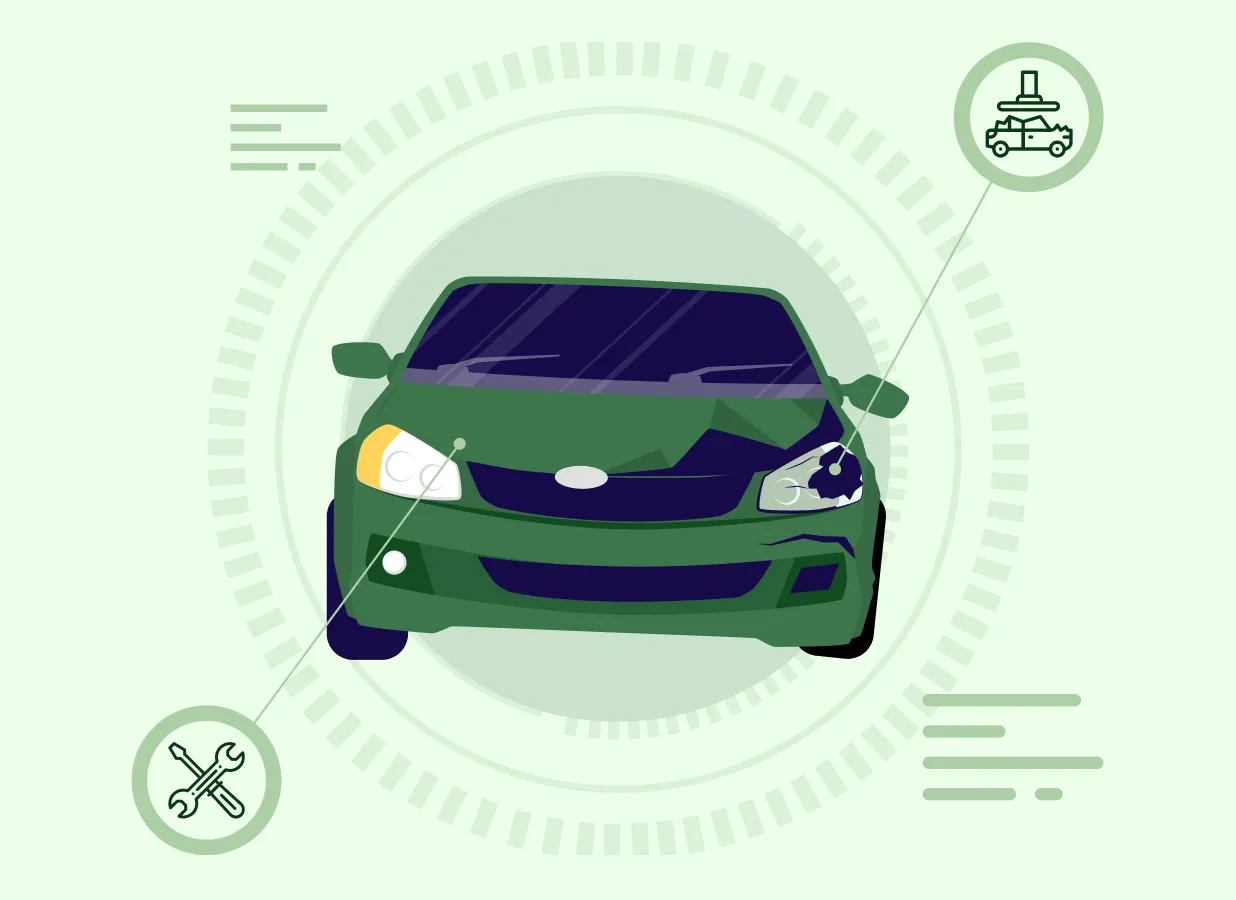
For example, a new collision may damage one door while an older scratch on another panel is added to the same estimate. In other cases, existing dents, paint damage, cracked lamps, or mechanical issues may be presented as consequences of the recent accident.
This is not always deliberate. Vehicles accumulate minor damage, and customers may not remember precisely when every mark appeared. The fraud occurs when known pre-existing damage is intentionally presented as new.
A reliable pre-policy inspection creates a dated baseline of the vehicle’s condition. Guided images, vehicle identification checks, timestamps, and a clear damage record can help insurers resolve later disputes more fairly and efficiently.
6. Duplicate Claims and Reused Evidence
Duplicate fraud occurs when the same loss is claimed more than once.
- Submitting the same damage to more than one insurer
- Claiming through different policies or insured parties
- Reporting the same incident again with a changed date, location, or narrative
- Reusing photographs, invoices, estimates, or parts quotations from an earlier claim
Simple exact-match checks may miss the duplication because small details can be changed. Effective detection requires insurers to compare the wider pattern: vehicle identifiers, damage location, image similarities, accident participants, repairers, invoices, contact details, and the timing of related claims.
This becomes harder when information sits in disconnected policy, claims, inspection, and repair systems.
7. Fraudulent Vehicle Theft Claims
Vehicle theft is a genuine risk, but theft coverage can also be abused.
An owner may report a vehicle as stolen when it has actually been hidden, abandoned, sold informally, exported, transferred to another person, dismantled for parts, or deliberately destroyed.
Financial pressure may be one motivation, particularly when the outstanding finance exceeds the vehicle’s market value or the owner can no longer meet the payments. Other schemes may involve third parties who arrange the vehicle’s disappearance.
A theft investigation may therefore need to consider ownership and finance records, keys, vehicle location information where lawfully available, recent communications, border or export records, and the timeline leading up to the report. The absence of the vehicle alone does not explain how it disappeared.

8. Repair, Estimate, and Parts Fraud
Fraud does not end when a claim is approved. It can also arise during inspection, estimating, parts sourcing, and repair.
- Inflating labor hours, repair rates, or the extent of damage
- Charging for work that was not completed
- Billing for new or original-equipment parts while installing used, aftermarket, lower-value, or counterfeit parts
- Adding unrelated damage to the estimate
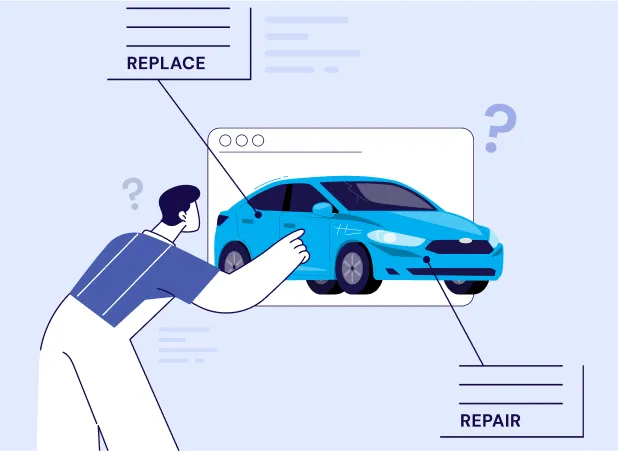
- Replacing parts that could reasonably be repaired
- Submitting repeated supplementary estimates without adequate evidence
- Claiming that safety components, such as airbags or sensors, require replacement when they do not
- Hiding the customer’s policy excess within an inflated invoice
- Creating false invoices or quotations
- Collusion between a customer, assessor, repairer, towing provider, or parts supplier
These practices do more than increase claim costs. Incomplete repairs, unsuitable parts, or unperformed safety work can affect the vehicle after it returns to the road.
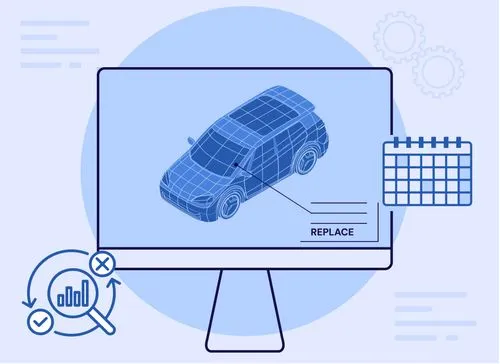
Insurers therefore need visibility beyond the initial estimate. They need to understand what was approved, what was actually repaired, which parts were fitted, why supplements were raised, and whether the final invoice matches the completed work.
9. Fake Policies and Unauthorized Intermediaries
Motor insurance fraud can also target the customer rather than the insurer.
Fraudsters may advertise unusually cheap policies through social media, messaging apps, online marketplaces, or personal networks. They may pretend to represent a legitimate insurer or broker, collect payment, and provide a fake or altered policy document.
- Purchasing a genuine policy using inaccurate customer or vehicle information
- Altering the insured value, coverage, dates, or customer details on a real document
- Canceling a policy after collecting payment from the customer
- Using the name, logo, or documents of a licensed insurer without authorization
This is particularly relevant in a market where customers frequently compare motor policies online and communicate with brokers through digital channels. In June 2026, Dubai Police warned residents about fake vehicle and health insurance offers promoted through social media at unrealistically low prices and advised customers to verify that the insurer or broker is officially licensed before transferring money.
A customer may only discover the fraud during vehicle registration, a traffic check, or an attempted claim. Insurers are also affected when their brands and documents are misused to create false confidence.
How Digital Manipulation Is Changing Traditional Fraud
Many forms of motor insurance fraud are not new. What is changing is how easily convincing evidence can be created or altered.
Images can be edited to add damage. Repair invoices and accident documents can be modified. Generative AI can create realistic-looking crash photographs, false documents, or complete accident scenes that never existed.
Digital manipulation is usually not a separate type of fraud. It is a method used to support traditional schemes such as fabricated accidents, exaggerated damage, duplicate claims, false theft reports, and application fraud.
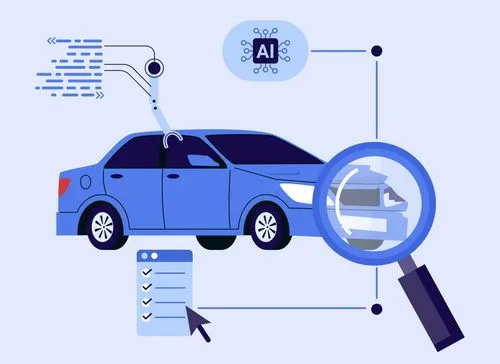
This means insurers need to understand more than what an image appears to show. They also need to consider how it was captured, whether the original file is available, whether the metadata and location are consistent, whether other images show the same vehicle, and whether the visual damage matches the reported accident.
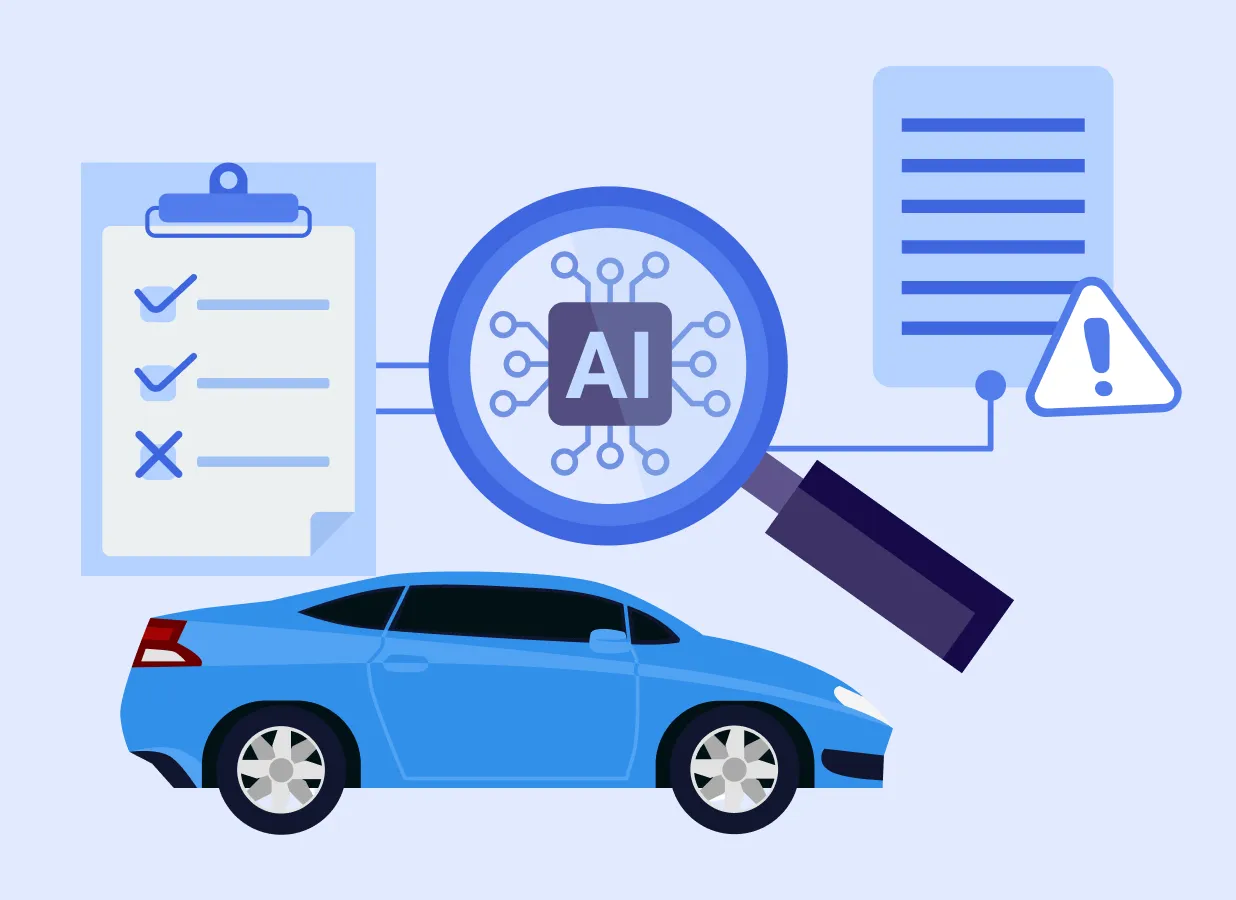
No single detection tool is sufficient. Recent motor-insurance research on AI-generated claim evidence recommends a layered approach combining stronger workflows, secure data handling, technical verification, and human review.
How GCC Insurers Can Identify Fraud Without Slowing Every Claim
Fraud prevention creates an important balance. Insurers need effective controls, but most customers are genuine. Applying the same level of investigation to every claim can delay settlement, increase complaints, and make an already stressful experience more difficult.
The objective should be to collect reliable information early, identify unexplained inconsistencies, and apply additional review only where the risk justifies it.
Establish the vehicle’s condition before coverage
Digital pre-policy inspections can record existing damage, verify the vehicle’s identity, and create a clearer baseline for future claims. This is especially valuable when the vehicle is inspected remotely or when the policy is issued through a digital channel.
Validate the claim against the official accident record
The accident report, claim narrative, images, damage pattern, and parties involved should tell a consistent story. Differences do not automatically prove fraud, but unexplained differences should be reviewed before the claim progresses.
Capture evidence securely at the beginning
Guided image capture, timestamps, location controls where legally permitted, document checks, and clear submission instructions can improve the quality of evidence collected at first notification of loss.
Connect policy, claims, vehicle, and repair information
Suspicious patterns are harder to identify when application data, accident records, earlier inspections, claim images, estimates, and repair invoices sit in different systems.
Look for relationships, not only isolated red flags
A single unusual detail may have a reasonable explanation. Repeated links between the same drivers, vehicles, contact numbers, repairers, assessors, towing providers, invoices, and accident patterns can provide a more meaningful basis for investigation.
Monitor repairer and supplier patterns
Insurers should review estimate inflation, supplement frequency, repair-versus-replace decisions, storage duration, parts usage, invoice changes, and repeated exceptions across the repair network.
Use risk-based triage
Claims with complete and consistent information should be allowed to move efficiently. Claims with material inconsistencies or higher-risk indicators should be directed to experienced investigators or assessors.
Keep human judgment in the process
Fraud indicators are signals, not verdicts. Technology can surface patterns and anomalies, but a qualified person should review the context before a claim is delayed, rejected, or escalated. An unusual claim is not necessarily a fraudulent one.
Motor Insurance Fraud Is an Ecosystem Problem
Motor insurance fraud rarely exists in only one part of the process.
A false statement made during the application may affect a claim months later. A staged collision may involve several drivers and service providers. A genuine accident may become fraudulent only after unrelated damage or inflated repairs are added.
Preventing fraud therefore requires more than one detection rule or one specialist team. It requires connected information, consistent controls, and collaboration among underwriting teams, claims professionals, investigators, accident-management providers, repairers, parts suppliers, intermediaries, and regulators.
Addenda’s AI-powered solutions that support this connected approach across digital pre-policy inspection, first notification of loss, vehicle damage assessment, claims workflows, and repair management. By helping authorized participants work from clearer and more consistent information, insurers can identify suspicious activity earlier while allowing genuine claims to progress with less friction.
Fraud will continue to evolve. The strongest response is not to treat every claim as suspicious. It is to build a process that can recognize the difference.
Sources and Further Reading
1. Central Bank of the UAE, Risk Management and Internal Controls Standards for Insurance Companies: Countering Fraud in Insurance
2. Saudi Insurance Authority, Anti-Fraud Regulation
3. Najm, Official Accident Reporting Service in Saudi Arabia
4. Dubai Police warning on fake insurance offers, reported by Khaleej Times, 16 June 2026
5. Milliman, Accidents That Never Happened: Generative AI and Fraud in Motor Insurance
6. Central Bank of the UAE, Insurance Brokers Regulation
.png)











.svg)

.webp)


.webp)
.webp)