


.webp)
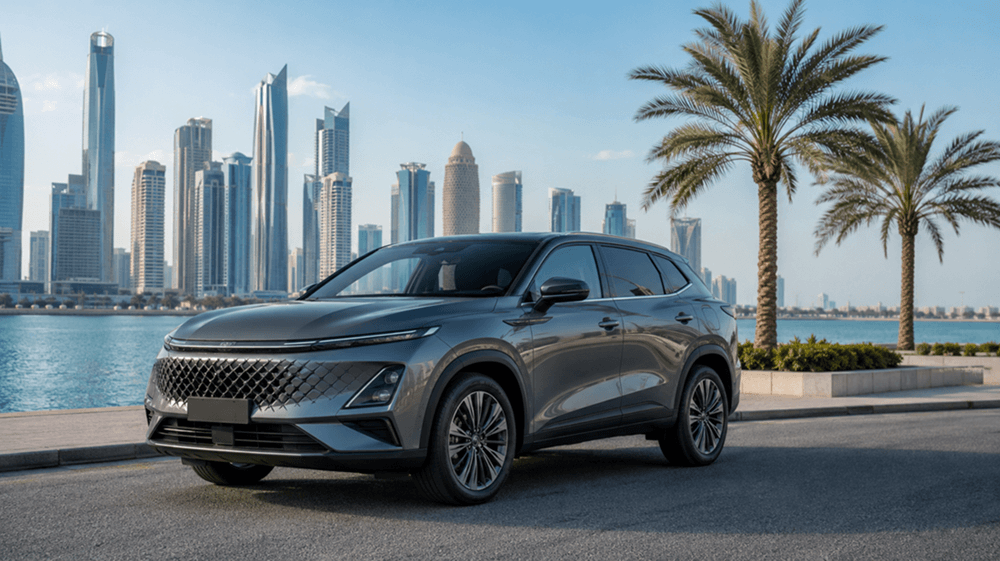
Their growth is being driven by competitive pricing, long warranty packages, modern design and increasingly sophisticated vehicle technology.
That growth has created a new question for motorists and insurers: why can some Chinese cars be more expensive to insure than comparable vehicles from more established brands?
The important word is some. Insurance pricing is not determined by a vehicle's country of origin alone. It depends on the specific model, market value, claims experience, repair cost, parts supply, workshop network, technology and the insurer's own risk appetite. The available GCC evidence also shows that the picture differs by country.
What the UAE market tells us
The UAE currently provides the clearest public evidence of a premium gap. In June 2025, Khaleej Times reported that the average comprehensive premium for a Chinese sedan or crossover was around AED 2,800 to AED 3,000, compared with approximately AED 2,100 for Japanese and Korean vehicles. The report said premiums could be up to 43% higher in some comparisons.
By July 2026, Al Khaleej, citing Policybazaar UAE data for 2025–2026, reported significant variation in average insurance costs across Chinese vehicle brands. In the published reference figures, one brand recorded average premiums of around AED 1,440–1,600 for sedans and SUVs, while another was listed at approximately AED 3,250. These are reference figures rather than fixed premiums, but the difference illustrates how significantly insurance costs can vary from one Chinese brand to another.
This distinction matters for a GCC-wide discussion. A premium pattern documented in the UAE should not automatically be presented as a regional rule. In Saudi Arabia, for example, an insurance comparison platform notes that the lower purchase price of many Chinese models can result in lower comprehensive premiums Reliable public comparative data for Bahrain, Kuwait, Oman, and Qatar is still limited, so a blanket statement that "Chinese cars are more expensive to insure across the GCC" cannot currently be confirmed.
Why can some Chinese models attract higher premiums?
1. Insurers have less historical claims data
Insurance pricing becomes more precise when insurers have years of claims data for a particular model: how often it is involved in a claim, which components are typically damaged, how long repairs take and how much those repairs cost.
Many Chinese brands and model lines have entered Gulf markets relatively recently. In the UAE, Chinese vehicles rose from about 2% of motor-insurance enquiries in early 2023 to more than 10% by mid-2025. Rapid growth can therefore outpace the amount of mature claims data available to insurers. Where loss experience is less predictable, underwriters may price more conservatively until they have enough data to distinguish one model from another.
2. Collision repair economics matter more than routine servicing
A car can be affordable to service and still be expensive to insure. Insurers are primarily concerned with the cost of restoring a vehicle after an accident, not the price of an oil change or routine maintenance.
For some newer Chinese models, insurers and brokers have cited longer repair timelines, dependence on authorized dealer channels and limited access to alternative collision-repair parts as reasons for higher claim costs.
This situation is also evolving. In July 2026, UAE distributors told Emirates Today that parts availability for major Chinese brands had improved significantly, supported by larger local inventories and regional warehouses. They argued that the issue is increasingly not whether genuine parts exist, but whether non-agency repairers can obtain lower-cost alternatives as easily as they can for longer-established brands.
3. The repair network may still be developing
Insurers do not look only at the price of a bumper or headlamp. They also consider how quickly the vehicle can be diagnosed, repaired, calibrated and returned to the customer.
Established Japanese and Korean brands have had decades to build broad dealership, parts and independent-repair ecosystems across the Gulf. Some Chinese brands now have strong regional networks as well, but newer entrants may still have fewer qualified workshops or a greater dependence on agency repair. A smaller repair network can increase vehicle off-road time and make claim costs less predictable.
4. More technology can mean more expensive accident repairs
One of the strengths of many Chinese vehicles is the amount of technology offered at competitive price points. Cameras, radar, parking sensors, advanced driver-assistance systems, large lighting assemblies, and electronic control units are increasingly common.
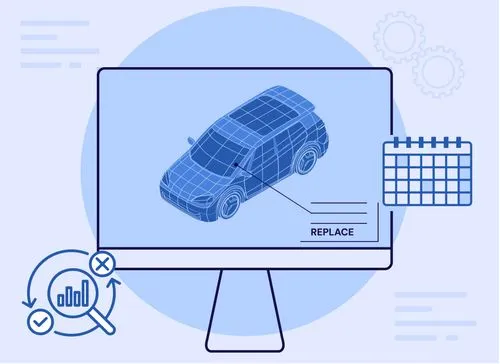
The insurance implication is that the purchase price of the car does not always reflect the complexity of repairing it after a collision. A damaged bumper, for example, may also involve sensors, wiring, calibration and diagnostic work. UAE insurance guidance specifically identifies advanced technology and repair complexity as factors that can increase premiums for some Chinese vehicles.
5. Chinese EVs add another layer of complexity
The growth of Chinese electric vehicles creates an additional underwriting consideration. EVs have their own repair profile regardless of where they are manufactured.
UAE market reporting in 2025 found EV premiums running about 20% to 35% higher than comparable conventional vehicles in some cases. Insurers cited battery replacement costs, high-voltage systems, limited specialist repair capacity and the sensitivity of electrical components. A Chinese EV can therefore combine two separate issues: the insurer may have limited model-specific claims history, while the vehicle also carries the repair complexity associated with an EV.
Does this mean Chinese cars are riskier?
Not necessarily. Higher insurance premiums do not prove that Chinese cars are less safe, less reliable or more likely to be involved in accidents. The sources reviewed for this article do not establish a higher accident frequency for Chinese vehicles.
What the evidence does show, particularly in the UAE, is that insurers have historically faced greater uncertainty around repair cost, parts channels, workshop availability and claims history for some models. Those are underwriting and repair-economics questions, not a judgment on vehicle quality.
Why the gap may narrow over time
Insurance pricing changes as the market matures. As a vehicle brand sells more units, insurers accumulate more claims data. As distributors expand their parts warehouses and workshop networks, repair times can become more predictable. And as independent repairers gain access to training, diagnostics and parts, insurers gain more options for managing claims.
This is already visible in the UAE. Insurers are moving toward more brand- and model-specific pricing rather than treating Chinese vehicles as one broad category, while distributors are investing in local parts inventories and service capacity.
That shift is important. A mature insurance market should ultimately price the actual risk of a specific vehicle and repair ecosystem, rather than rely on broad assumptions about origin.
What this means for the GCC motor-insurance ecosystem
The rapid growth of Chinese vehicles presents an opportunity for insurers, repair networks and automotive distributors across the GCC. The more accurately the ecosystem can measure repair cost and claims performance, the less it needs to price uncertainty.
- Insurers need model-level claims data rather than broad brand or country-of-origin assumptions.
- Repair networks need accurate parts, labor, calibration and repair-time data.
- Distributors can reduce underwriting uncertainty by strengthening parts availability and qualified repair capacity.
- EV growth increases the need for battery diagnostics, high-voltage safety procedures and specialized repair expertise.
- More connected claims and repair data can help insurers distinguish genuinely expensive risks from vehicles that are simply new to the market.
As Chinese brands become a larger part of Gulf roads, the question is likely to shift from "Are Chinese cars expensive to insure?" to "What does this specific model actually cost to repair and insure?" That is a more useful question for motorists, insurers and the wider automotive ecosystem.
Frequently asked questions
Are Chinese cars always more expensive to insure in the GCC?
No. The strongest evidence of higher premiums comes from the UAE, and even there prices vary considerably by brand and model. In Saudi Arabia, lower vehicle values can make some Chinese cars cheaper to insure. There is not enough comparable public data to confirm a GCC-wide premium penalty.
Why can a relatively affordable car still have a high insurance rate?
Insurance reflects potential claim cost, not only purchase price. A lower-priced vehicle can contain expensive sensors, electronics or model-specific body parts, and longer repair times can also increase the insurer's total claim cost.
Will Chinese-car insurance become cheaper?
It may become more competitive for individual models as insurers gain more claims history and as parts and repair networks mature. However, future premiums will still depend on each model's actual claims performance, repair cost and broader insurance-market conditions.
Are Chinese EVs more expensive to insure?
They can be. EV-specific factors such as battery cost, high-voltage repair requirements and specialist workshop capacity can increase claim severity. These factors are separate from the vehicle's country of origin.
Disclaimer
This article is provided for general informational purposes only and does not constitute insurance, financial, or legal advice. Insurance premiums, coverage, underwriting criteria, and repair costs vary by insurer, vehicle model, driver profile, market conditions, and other factors.
Any pricing figures, market data, or comparisons referenced in this article are based on publicly available third-party sources cited at the time of publication and should not be interpreted as current quotations or guaranteed insurance rates.
All company, brand, and product names mentioned are the property of their respective owners. Their inclusion is for editorial and informational purposes only and does not imply any affiliation with, endorsement by, or sponsorship of Addenda.
.png)










.svg)

.webp)


.webp)
.webp)